These five floral amigurumi concepts let flowers reshape familiar animals. A mint-green koala clutches a bouquet of dried blossoms, a cream moth wears embroidered floral wings, a seafoam turtle carries a tiny garden on its shell, a pink dolphin arches over a coral-and-pearl wave, and a cream deer has antlers twined with blossoms and crystal drops. All images are AI-generated concept illustrations for inspiration, not photos of finished handmade pieces.
The collection shares a dreamy palette of mint, cream, blush pink and soft gold, with tiny pearl and crystal details that catch the light. Each figure treats flowers differently – as a held bouquet, as wing patterns, as a shell-top garden, as a surrounding coral and as antler decoration. Comparing those five uses of the same material is the heart of this set.
A mint koala holding a dried flower bouquet
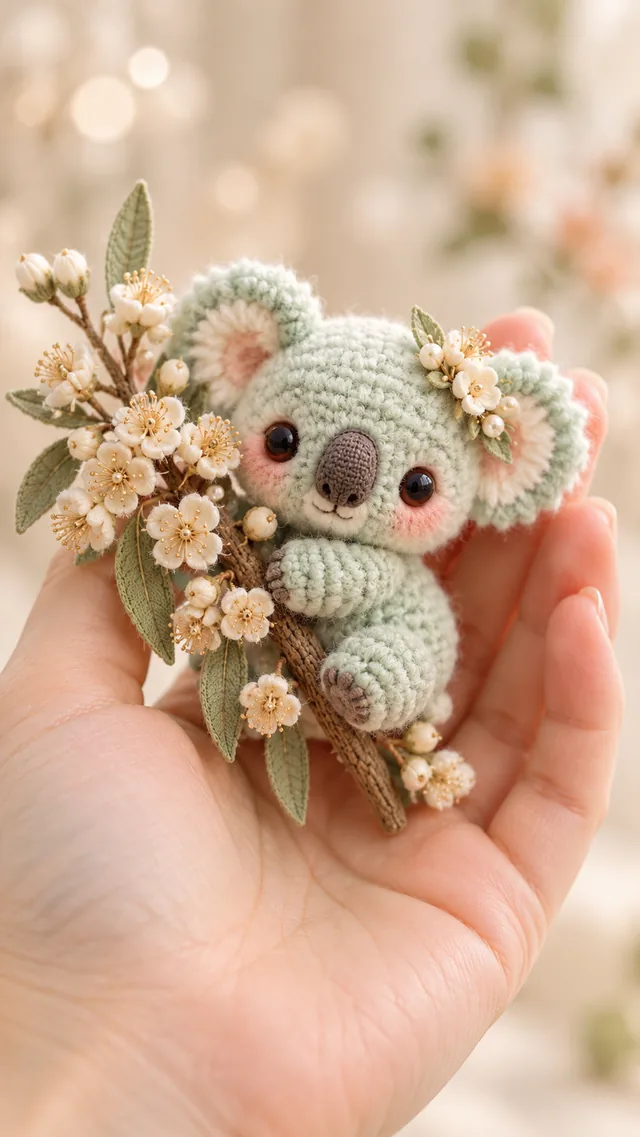
The koala is the most bouquet-forward of the five. A mint-green body with big fluffy ears and dark glassy eyes wraps both arms around an oversized bunch of cream blossoms, tiny white flowers and trailing green leaves. The bouquet nearly hides the body, so the figure reads as a flower delivery with a koala attached.
The mint-and-cream pairing keeps the palette airy. Because the flowers are all white and cream, the koala's green body becomes the main color accent, and its pink cheeks add a second soft note. The way the bouquet leans to one side gives the composition a natural, just-picked asymmetry.
For a mood board, the koala demonstrates proportion play: the bouquet is intentionally larger than the animal, which creates charm instead of imbalance. Letting one element exaggerate its scale is a useful trick for miniature design, provided the rest of the figure stays simple enough to support it.
Compared with the deer, whose flowers are small and structural, the koala carries its flowers loosely and abundantly. Both approaches are floral but they tell different stories – a gift versus a crown. The image remains an AI-generated concept for inspiration, with no construction guidance implied.
A cream moth with embroidered floral wings
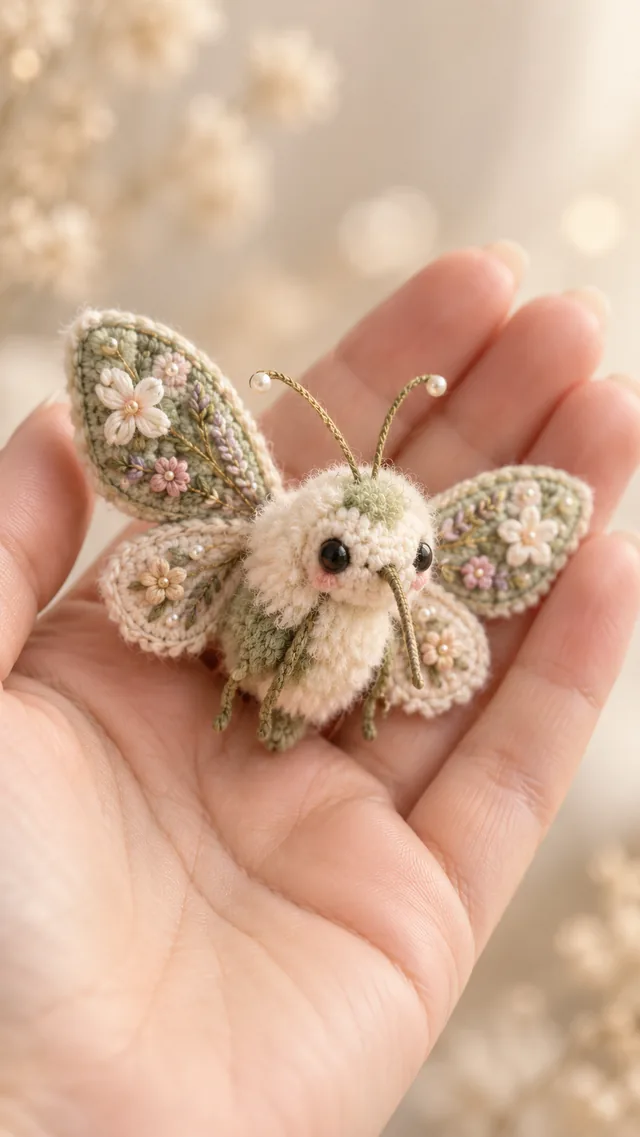
The moth is the quietest figure in the collection. A fuzzy cream body with dark bead eyes and fine curled antennae rests between two large wings, each one embroidered with tiny pink blossoms and green leaves like a stitched herbarium. The wings are slightly raised, as if the moth has just landed.
Using embroidery on the wings is the standout idea: instead of attaching flowers on top, the flowers become part of the surface pattern. That keeps the silhouette slim and elegant. The cream ground lets the delicate thread colors do all the talking, and the symmetry of the wings adds calm.
For a mood board, the moth suggests surface decoration as an alternative to appliqué. Painting, stitching or embroidering small motifs directly onto a figure's body can carry a theme without adding bulk. This suits small pieces where every extra layer adds thickness.
Against the turtle, whose garden sits fully in three dimensions, the moth is flat and graphic. Together they show the range between pattern and sculpture when working the same floral material into an animal. As with all the images here, the moth is an AI-generated concept for inspiration only.
A turtle with a flower garden on its shell
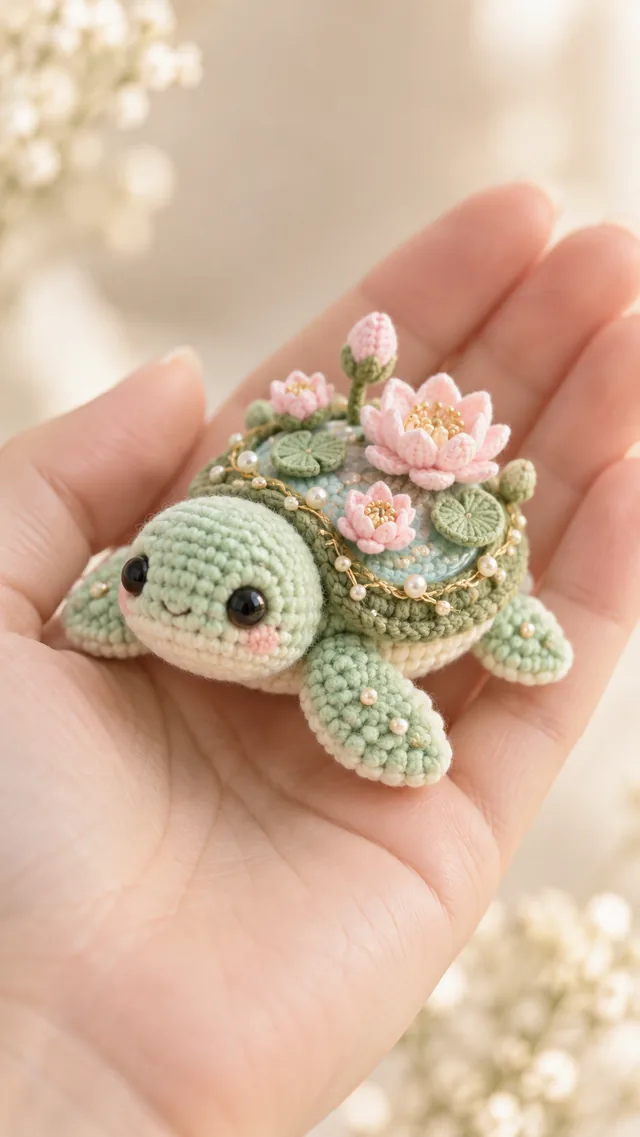
The turtle is the gardener of the group. A seafoam-green body with a soft smiling face carries a high domed shell completely overgrown with pink blossoms, rosebuds and leafy vines, as if a flowerbed had sprouted from its back. The shell's texture is still visible under the foliage, which anchors the fantasy.
The design works because the shell is a ready-made platform: it is round, raised and central, the perfect stage for a miniature garden. The pink flowers contrast gently with the green shell, and the small buds at different heights keep the arrangement from looking flat.
For a mood board, the turtle illustrates built-in stages: some animal shapes naturally offer a shelf, a dome or a back where decoration can live. Identifying that stage in a chosen animal – a shell, a mane, a pair of antlers – is a shortcut to a strong themed figure.
Compared with the moth's flat embroidered wings, the turtle's garden is fully sculptural, with blossoms standing up from the surface. The two extremes bracket how much dimension a floral theme can carry. This is an AI-generated concept image: inspiration for theme placement, not a realizable pattern.
A pink dolphin above a coral wave
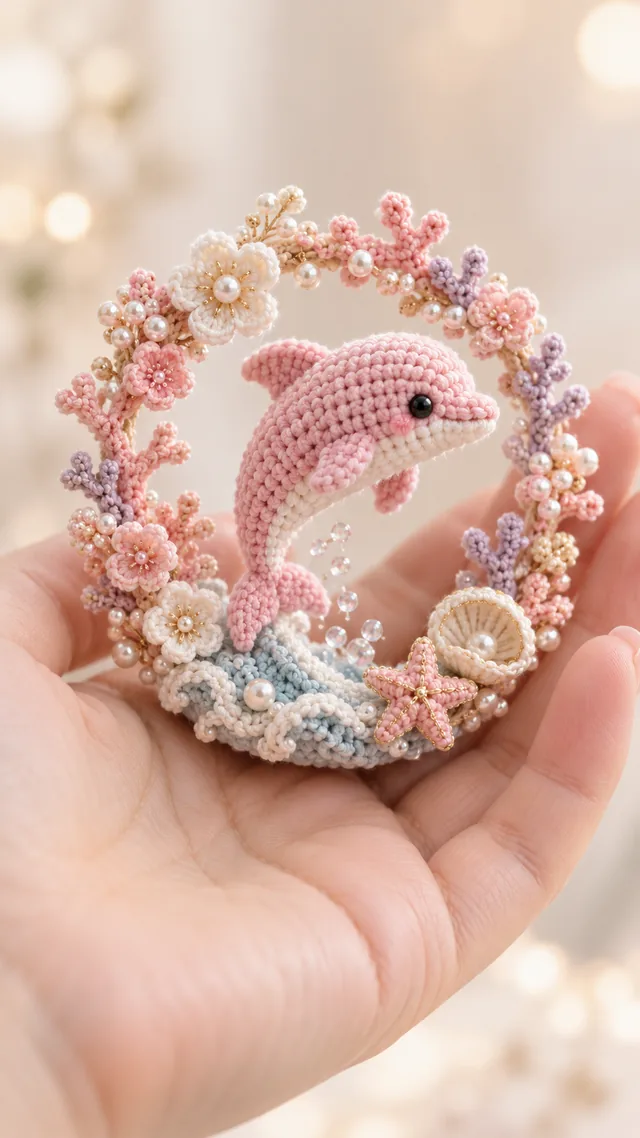
The dolphin is the most sculptural of the five. A pink dolphin with a white belly and a gentle eye curves upward in an arc, rising from a dense base of pink and blue coral branches, tiny pearls, beaded flowers and an unexpected little lemon-slice accent. The base is nearly as tall as the dolphin, making the piece feel like a tiny seascape.
The underwater garden replaces the usual flower vocabulary with coral, pearl and shell motifs, which expands the floral idea into a marine one. The cool blue touches inside the base balance the dominant pinks. The lemon slice adds a whimsical, surreal note that keeps the scene from becoming too literal.
For a mood board, the dolphin shows how a base can become a habitat. Instead of a plain stand, the support is a second miniature environment. Any animal can be paired with such a base – a fox over autumn leaves, a bird over blossoms – and the base doubles the storytelling space.
Set against the koala's handheld bouquet, the dolphin's habitat is its ground rather than its cargo. Both figures are flower-forward, but one carries the garden and the other stands in it. As always, this is an AI-generated concept for inspiration, not a photograph of a finished piece.
A cream deer with blossom antlers
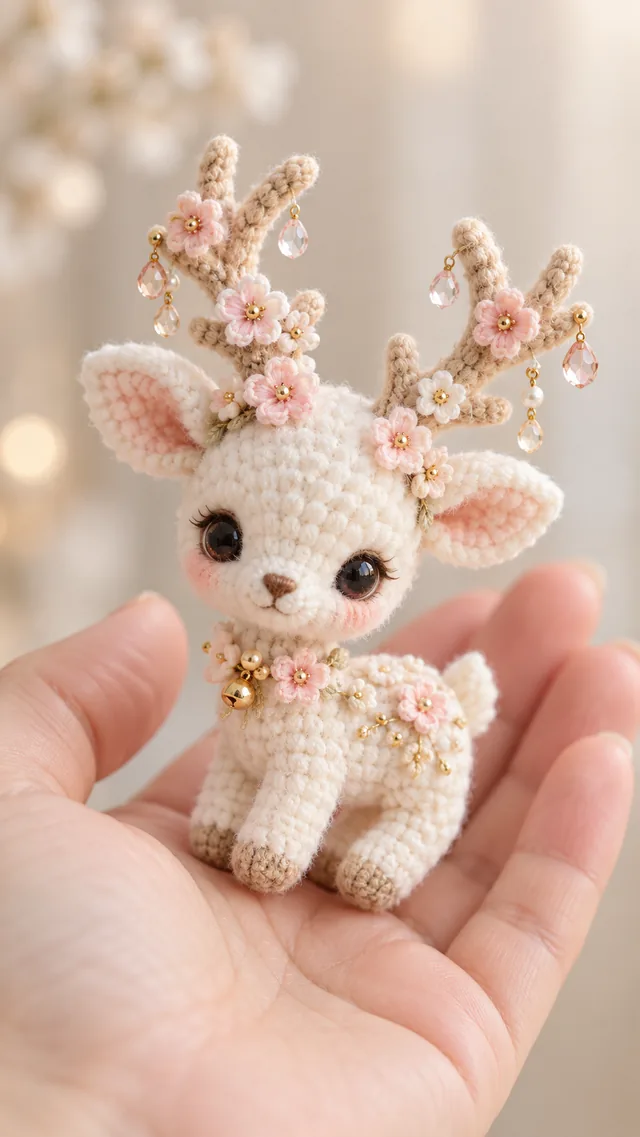
The deer is the most regal figure in the set. A cream fawn body with oversized ears, dark eyes and a soft muzzle stands alert, while its small antlers are wrapped in pink blossoms and hung with tiny crystal drops that catch the light. A delicate beaded collar echoes the antler decoration.
Antlers are nature's own flower stand: they offer branching arms where blossoms can sit naturally. The crystal drops add movement and a jewel-like note, turning the deer into something between a forest animal and a festive ornament. The restrained cream body lets every decorative detail read clearly.
For a mood board, the deer demonstrates accessorizing structure: find the branches, edges or corners already present in a figure and decorate those. Ears, antlers, tails and collars all qualify. This keeps additions feeling integrated rather than pasted on.
Compared with the turtle's shell garden, the deer's decoration is linear and vertical, drawing the eye upward. The two figures show how the same floral material behaves on a dome versus on branching points. The image is an AI-generated concept for inspiration only, with no pattern implied.
Five ways to give an animal flowers
The five concepts each answer the same question differently: where do the flowers go? In the koala's arms, across the moth's wings, on the turtle's shell, around the dolphin's base and in the deer's antlers. Choosing the placement is the single decision that defines each figure's character.
A useful planning exercise is to pick one animal and try all five placements mentally – held, worn, carried, surrounded and crowned. Some combinations will feel natural and others forced, and noticing why teaches more about design than copying any single image.
All five images are AI-generated concept illustrations. They offer ideas for character, palette and floral placement, but they are not photographs of finished crocheted pieces and include no patterns or instructions. Use them as a starting point for your own floral amigurumi mood board.
Read how we present crochet inspiration or send a suggestion or correction.