Scandinavian Christmas is the quietest, warmest holiday style — red and white, wool and wood, motifs older than the christmas tree tradition itself. This set of five crochet ornament concepts honors that vocabulary: a dala horse, a tomte gnome, a folk heart, a robin and a toadstool. All images are AI-generated concept illustrations for inspiration, not photos of finished handmade pieces.
The Scandinavian palette is disciplined — mostly red, white and natural tones — which is exactly why it reads as sophisticated. When comparing the five, watch how each ornament earns its place through silhouette and symbol rather than sparkle: these are ornaments that whisper jul.
Blue dala horse ornament
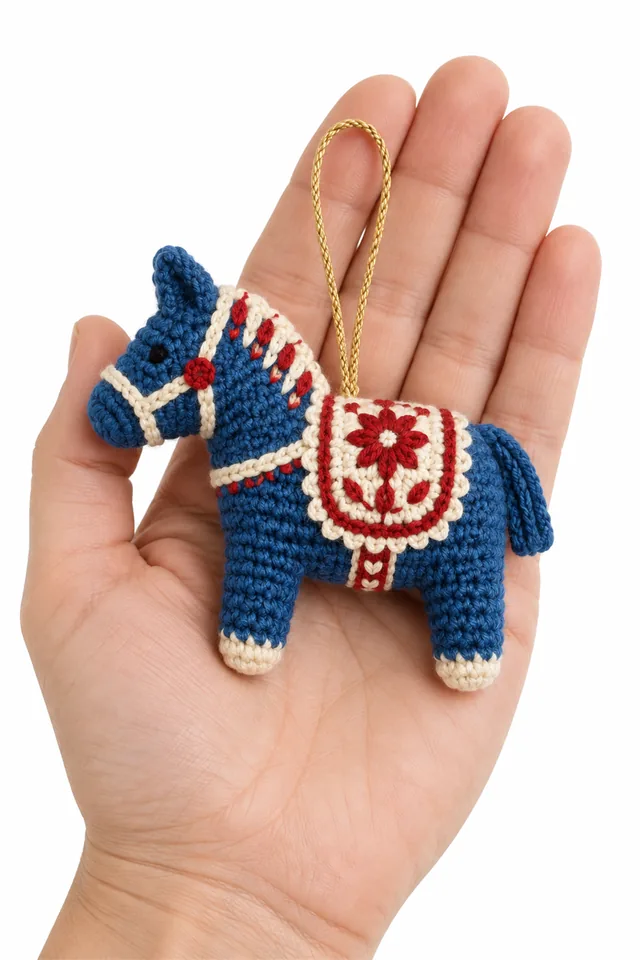
The blue dala horse is the icon of the collection. The carved-wood horse from Dalarna, Sweden, rendered in crochet with its distinctive curved back and sturdy legs — here in deep blue instead of the classic red, like a winter-night version of the original.
The dala horse silhouette is perfect for ornaments: flat-ish, readable at any size, and loaded with heritage. Folk motifs survive translation into any medium because they were designed by centuries of repetition to be unmistakable.
For a mood board, this horse shows the recoloring of a classic. Blue on a dala horse keeps the folk identity while refreshing it — tradition with a twist, the safest kind of ornament innovation. Honor the shape, play with the color.
Compared with the gnome, the horse is heraldic and profile-based where the gnome is round and frontal. As with every image here, treat this as an AI-generated concept for inspiration, not as a pattern.
Gray gnome Christmas ornament
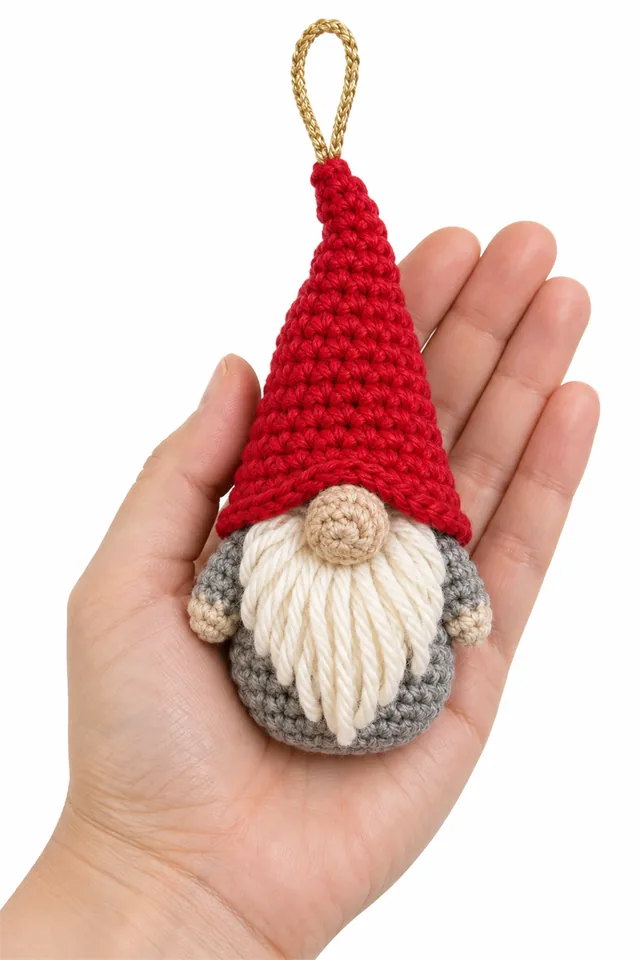
The gray gnome is the guardian of the tree. A tomte — the Scandinavian farm spirit — with a long cap pulled over his eyes and a beard that is most of his body. Natural gray wool-tones make him look like he walked in from the barn, not the craft store.
The tomte's design is radical minimalism: no eyes, no mouth, just cap, nose and beard. The hidden face is the whole charm — everyone imagines their own gnome. Character design by subtraction is a Scandinavian specialty.
For a mood board, this gnome demonstrates undyed-color authenticity. Gray, oat and cream read as natural fiber and pair with every other ornament style. A neutral folk figure calms even the most eclectic tree.
Set beside the red robin, the gnome is monochrome folklore where the robin is a single bright accent. The image remains an AI concept for layout and palette inspiration only.
Red and ivory folk heart ornament
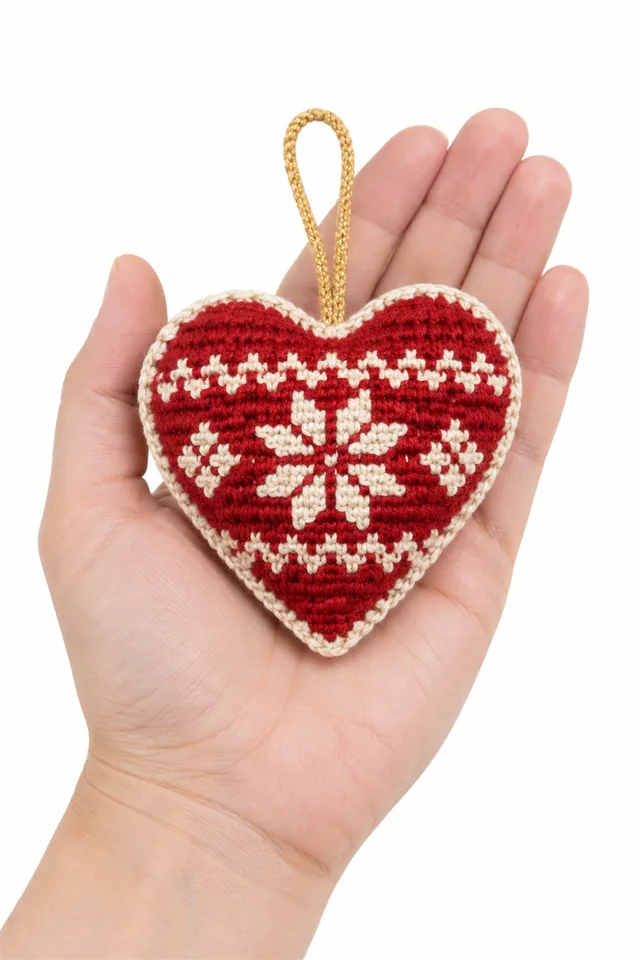
The folk heart is the warmth of the collection. Red on one side, ivory on the other, like the woven paper hearts (julehjerter) that Danish families braid together every December. In crochet, the two-tone heart becomes a small soft pillow of goodwill.
The braided paper heart is Denmark's beloved ornament — crochet translates the woven checker into texture and color-blocking. Two-tone construction is what makes it folk rather than generic: the heart is literally two pieces interlaced, a symbol made structural.
For a mood board, this heart shows duality as design. Red-and-white halves give the ornament a front and a back with different moods — folk objects that turn and change on the tree are gifts that keep moving.
Next to the toadstool, the heart is human sentiment where the toadstool is forest luck. As always, this is an AI-generated concept image: borrow the two-tone idea, not the construction.
Red robin folk ornament
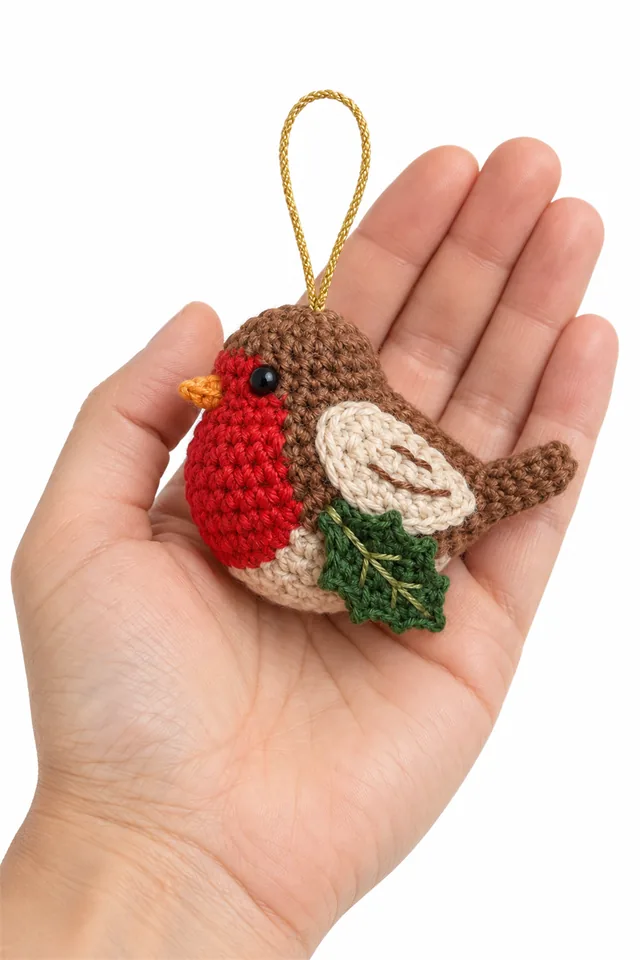
The red robin is the bird of the season. Plump, red-breasted and simplified to folk-art essentials, it hangs on the tree like a visitor from the winter garden — the bird that northern Europe watches for in the snow.
A folk bird needs only three decisions: body oval, breast patch, beak triangle. The robin's red breast against a soft body is nature's own color-blocking, and folk style means trusting that simplicity rather than adding feathers.
For a mood board, this robin demonstrates the accent-bird strategy. One or two bright birds on a tree of neutral ornaments create focal points without chaos. Birds are ornaments that imply life — the tree feels visited, not just decorated.
Compared with the dala horse, the robin is round and small where the horse is profiled and larger — companions of scale on the same branch. Both are AI-generated concept images for inspiration, not patterns.
Red toadstool Christmas ornament
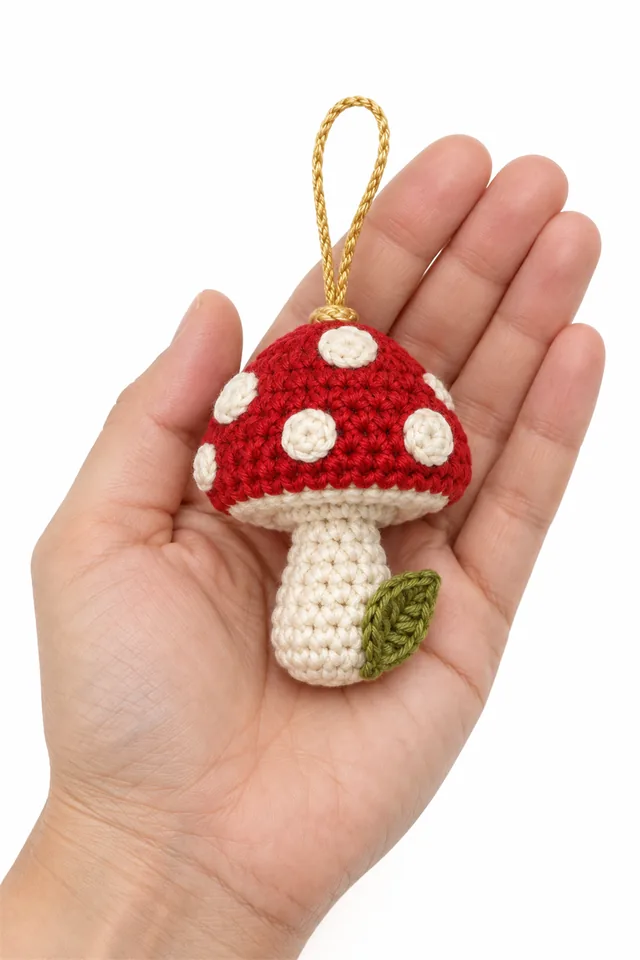
The red toadstool is the luck-bringer. The fly agaric mushroom — red cap, white dots — is the Scandinavian and German symbol of good fortune, tucked into Christmas trees and New Year's tables alike. In crochet, its dotted cap becomes a small sculpture of woodland magic.
The toadstool is nature's ornament design: the cap's dots are built-in polka dots, the stem a built-in hanger. Folk traditions adopted it because it is already graphic — a reminder that the best motifs are the ones nature pre-designed.
For a mood board, this toadstool shows symbolic color at work. Red-and-white reads as Christmas, but the mushroom adds a second meaning — luck — making it the ornament that outlasts December. Symbols with double lives earn their hook year-round.
Set against the folk heart, the toadstool is forest magic where the heart is hearth warmth — the two halves of a Scandinavian December. All five images are AI-generated concepts for inspiration only, not patterns or product photos.
A quiet, warm jul
These five ornaments answer the same question — what hangs on a Scandinavian tree? — with five symbols: heritage horse, guardian gnome, braided heart, winter bird and lucky mushroom. The red-white-neutral palette unifies them; each carries a story older than the tree itself.
When planning folk ornaments, choose symbols with real tradition behind them and let the palette stay disciplined. Folk style is not simplicity for its own sake — it is meaning, distilled.
All five images are AI-generated concept illustrations. They offer ideas for motif, palette and silhouette, but they are not photographs of finished crocheted pieces and include no patterns or instructions. Use them as a springboard for your own Scandinavian Christmas mood board.
Read how we present crochet inspiration or send a suggestion or correction.