A handbag is a small piece of architecture you carry, which makes art deco its perfect design language. This set of five crochet handbag concepts translates the era's fans, chevrons, arches, zigzags and sunrays into five very different silhouettes. All images are AI-generated concept illustrations for inspiration, not photos of finished handmade pieces.
The five bags share the deco palette — black with gold, copper, emerald, ivory with sapphire, deep wine — but each pairs its motif with a different bag shape: tote, frame handbag, clutch, purse and shoulder bag. When comparing them, notice how the geometry follows the construction. On a good deco bag, the pattern and the seams tell the same story.
Black and gold fan-mosaic bag
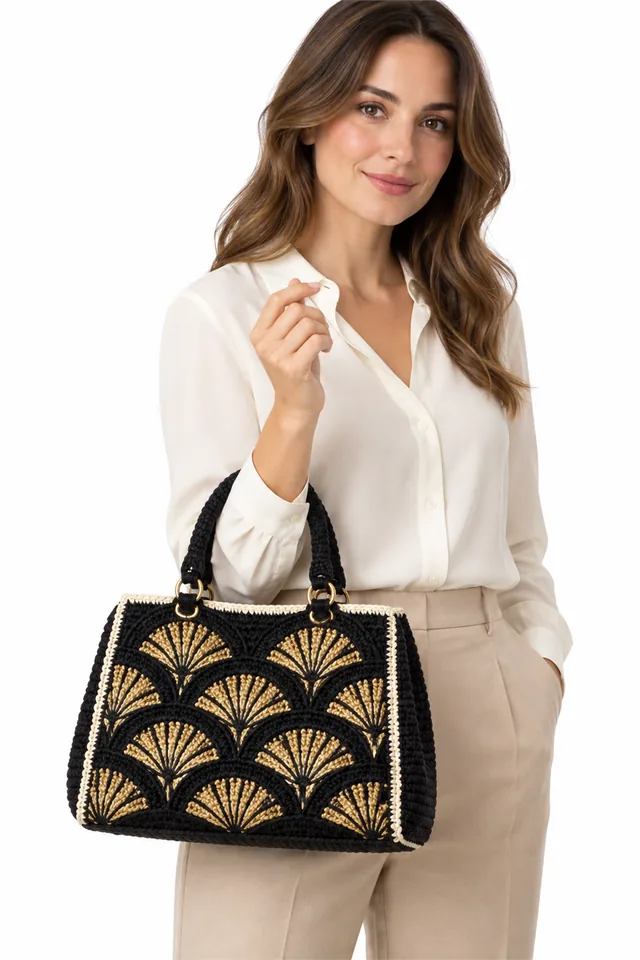
The black and gold fan-mosaic bag is the showpiece of the set. Golden fans tessellate across the black body like a mosaic of tiny rising suns, each fan overlapping the next. The allover pattern turns the bag into a piece of jewelry for the arm.
Allover mosaics succeed when the repeat is small and the contrast is high, and this bag gets both right. The fans are tight enough to read as texture from a distance and as pattern up close — a double reward that suits an accessory people actually lean in to see.
For a mood board, this bag demonstrates scale discipline. A motif that thrills at clutch size can overwhelm at tote size, so match the repeat to the canvas: small bags, small motifs, dense repeats. Let the pattern earn its close-up.
Compared with the ray-panel shoulder bag, the fan-mosaic is ornate where the other is streamlined. One covers the whole surface, the other concentrates it in panels — two opposite strategies, same era. As with every image here, treat this as an AI-generated concept for motif and scale, not as a pattern.
Copper chevron-frame handbag
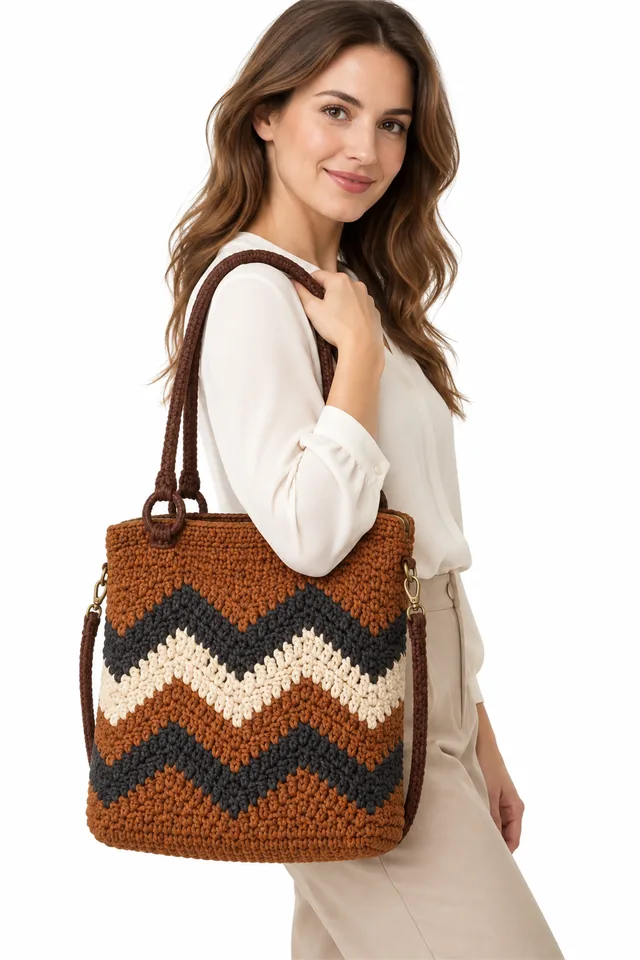
The copper chevron-frame handbag mixes eras deliciously: a vintage frame closure on top, bold chevron zigzags below. The warm copper tone softens the geometry, so the bag reads antique and modern at once — like something found in a very stylish grandmother's closet.
The frame closure is more than hardware here: its horizontal line gives the chevrons a starting edge, and the zigzags appear to hang from it like a curtain from a rail. Pattern and construction align, which is the secret handshake of good deco design.
For a mood board, this handbag shows how closures anchor patterns. A clasp, zipper or frame creates a natural border that a motif can respect. Align the pattern's top edge with the closure and the whole bag looks engineered rather than decorated.
Set beside the zigzag purse, the frame handbag is structured nostalgia while the purse is crisp geometry. Same zigzag family, different century mood. The image stays an AI concept, inspiration only, with no construction claims.
Emerald stepped-arch clutch
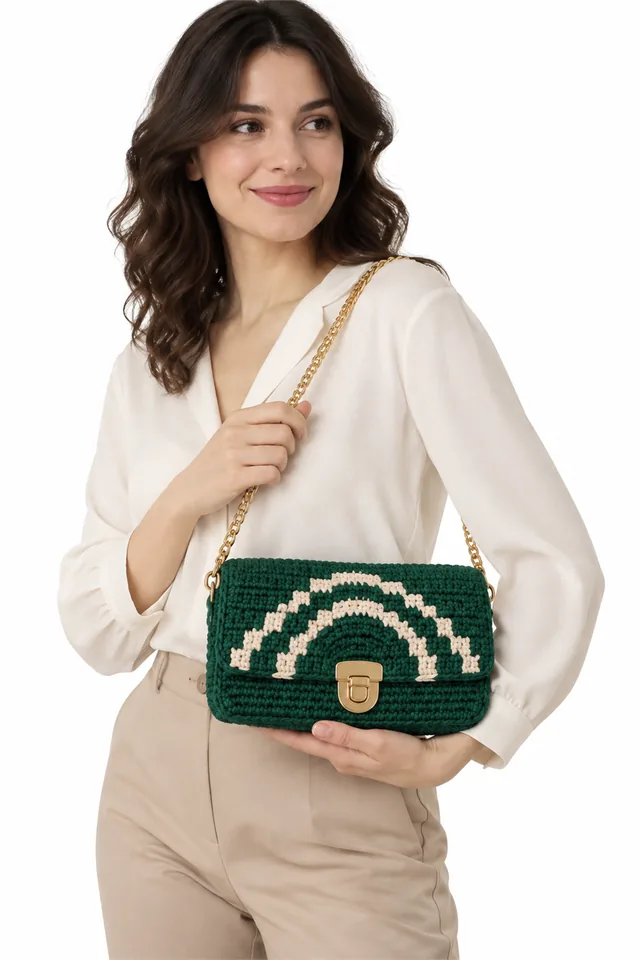
The emerald stepped-arch clutch is evening wear in miniature. A single stepped arch, like a tiny skyscraper crown, rises across the flap in tonal greens. The envelope silhouette gives the arch a clean stage, and the flap's edge echoes the arch's steps.
Clutches reward single strong gestures because there is so little surface: one arch, one flap, one gleam. Tonal greens keep the piece sophisticated rather than loud, and the deep emerald suits both winter velvet and summer silk.
For a mood board, this clutch argues for one-motif design on small bags. Resist stacking patterns on a small canvas. Choose the single shape that deserves the spotlight, center it, and let negative space do the rest of the styling.
Next to the fan-mosaic bag, the clutch is minimal where the other is maximal — a duet of less and more. Deco poster designers knew both moves well. As always, this is an AI-generated concept image: take the composition idea, not the making details.
Ivory and sapphire zigzag purse
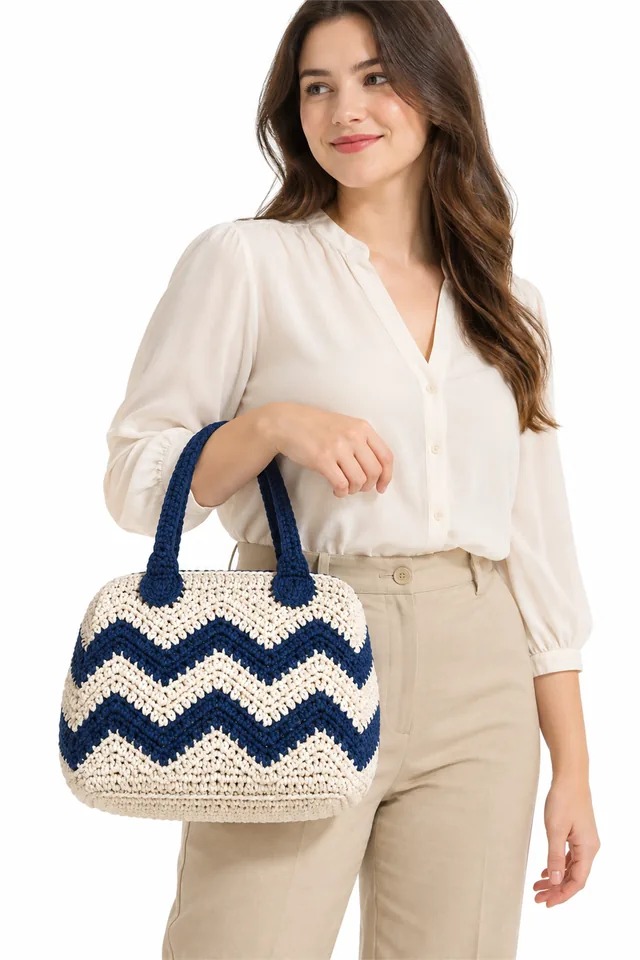
The ivory and sapphire zigzag purse is the freshest of the five. Bright sapphire zigzags race across an ivory body in crisp horizontal bands, like sea waves drawn by a draftsman. The purse's neat boxy shape gives the restless pattern a calm container.
The color pairing is doing heavy lifting: ivory lifts the zigzags into daylight, making the bag feel summery where black would have made it formal. A slim navy trim at the edges bookends the pattern and keeps the silhouette sharp.
For a mood board, this purse shows contrast as structure. When a pattern is bold, keep the shape simple; when the shape is simple, let the pattern run. One loud element per accessory is the rule that keeps deco chic instead of costume.
Compared with the chevron-frame handbag, the zigzag purse is its cooler cousin — same zigzag family, but chilled in blue and white instead of warmed in copper. Both are AI-generated concepts for inspiration, with no claim about real construction.
Wine ray-panel shoulder bag
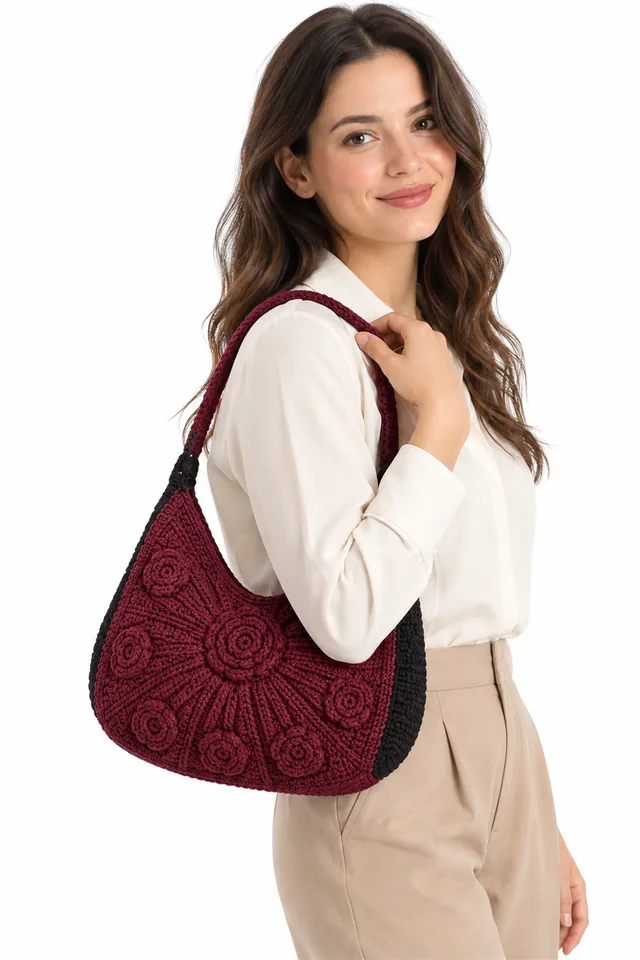
The wine ray-panel shoulder bag wears its sunrise on the front. A fan of rays bursts from a point at the base of the front panel, spreading upward like the marquee of a deco cinema. Deep wine gives the rays a velvet seriousness that pure red never manages.
Panel placement is the design's intelligence: the rays live only on the front, so the bag has a face. Carried against the body, it presents its burst to the world and its calm back to the wearer. The shoulder strap's clean line frames the panel like a poster rail.
For a mood board, this bag demonstrates front-face thinking. A shoulder bag is read from one side in most photographs and mirrors — design that side deliberately and let the others rest. One decorated panel beats five timid ones.
Set against the fan-mosaic bag, the ray-panel bag is the editorial to the other's tapestry — a single bold illustration versus an allover print. A collection benefits from both. All five images are AI-generated concepts for inspiration only, not patterns or product photos.
Small bags, grand geometry
The five handbags cover the deco's full vocabulary — mosaic, frame, arch, zigzag and sunray — each matched to the silhouette that flatters it most. The pattern and the construction agree with each other on every bag, and that agreement is what reads as elegance.
When planning a deco bag, pick the closure and silhouette first, then choose the motif that rhymes with them. A frame wants chevrons, a flap wants an arch, a front panel wants a burst. Let the hardware nominate the pattern.
All five images are AI-generated concept illustrations. They offer ideas for motifs, placement and palette, but they are not photographs of finished crocheted pieces and include no patterns or instructions. Use them as a springboard for your own handbag mood board.
Read how we present crochet inspiration or send a suggestion or correction.